
The moment I tell an owner their beloved dog has Collie Eye Anomaly, I watch anxiety cross their face. Decades of experience have taught me that this initial fear far exceeds what the condition typically warrants. Most CEA-affected dogs live entirely normal lives with excellent vision. Yet owners deserve honest, practical guidance about what to expect, what to monitor, and how to ensure their dog thrives regardless of diagnosis. Let me share what I have learned from caring for thousands of affected dogs and counselling their devoted owners.
First, Breathe: Understanding Your Dog's Specific Situation
CEA encompasses a wide spectrum of severity. Receiving a diagnosis tells you very little without knowing where on that spectrum your dog falls. The examination findings matter enormously.
If your dog has only choroidal hypoplasia (the mildest finding, present in roughly 75-80% of affected dogs), I can offer substantial reassurance. These dogs see perfectly well. The affected area lies outside the central visual axis and causes no functional impairment. They can catch balls, navigate agility courses, work livestock, and enjoy every activity available to any dog. They will not go blind. They need no special accommodations.
If your dog has colobomas, the picture is more nuanced but often still favourable. Small colobomas adjacent to the optic disc may create minor blind spots that dogs readily compensate for. Moderate colobomas warrant monitoring but frequently remain stable. Only large colobomas carrying significant detachment risk raise genuine concern.
Before worrying, ask your veterinary ophthalmologist or the examining veterinarian exactly what they found. Request a copy of the examination form with grading details. Understanding the specific findings allows appropriate calibration of concern.
A Typical Experience
Mrs. Campbell brought her newly acquired Shetland Sheepdog puppy, Heather, to me after the breeder disclosed a CEA diagnosis. She was distraught, having researched online and found alarming worst-case scenarios. On examination, Heather had bilateral choroidal hypoplasia of modest extent, with no colobomas or other complications. I explained that Heather's eyes, whilst technically affected, would serve her well throughout her life. Three years later, Heather competes successfully in agility and herds ducks at a local farm park. Her owner laughs now at her initial fears.
Monitoring: What to Watch For
Even dogs with mild CEA benefit from periodic monitoring, and those with more significant findings require closer attention. Here is what I advise.
Annual Ophthalmoscopic Examinations
For dogs with any degree of CEA, I recommend annual examinations by a veterinary ophthalmologist or veterinarian experienced in fundoscopic examination. These visits establish a baseline and detect any progressive changes early. Most dogs show no progression, but documenting stability provides reassurance.
Dogs with colobomas should be examined more frequently in the first two years of life, when complications are most likely to develop. After age two, annual examinations typically suffice unless changes are noted.
Home Observation
You see your dog every day; you are the first line of detection for visual changes. Learn to recognise signs of visual impairment:
- Bumping into objects - especially in unfamiliar environments or dim lighting
- Hesitation on stairs - particularly descending, where depth perception matters
- Difficulty tracking thrown objects - missing catches they previously made
- Startling when approached - if they did not see you coming
- Changes in eye appearance - redness, cloudiness, unequal pupil size, apparent discomfort
Any sudden change in visual behaviour warrants prompt veterinary attention. Retinal detachment, though uncommon, is a time-sensitive emergency where early intervention can sometimes preserve vision.
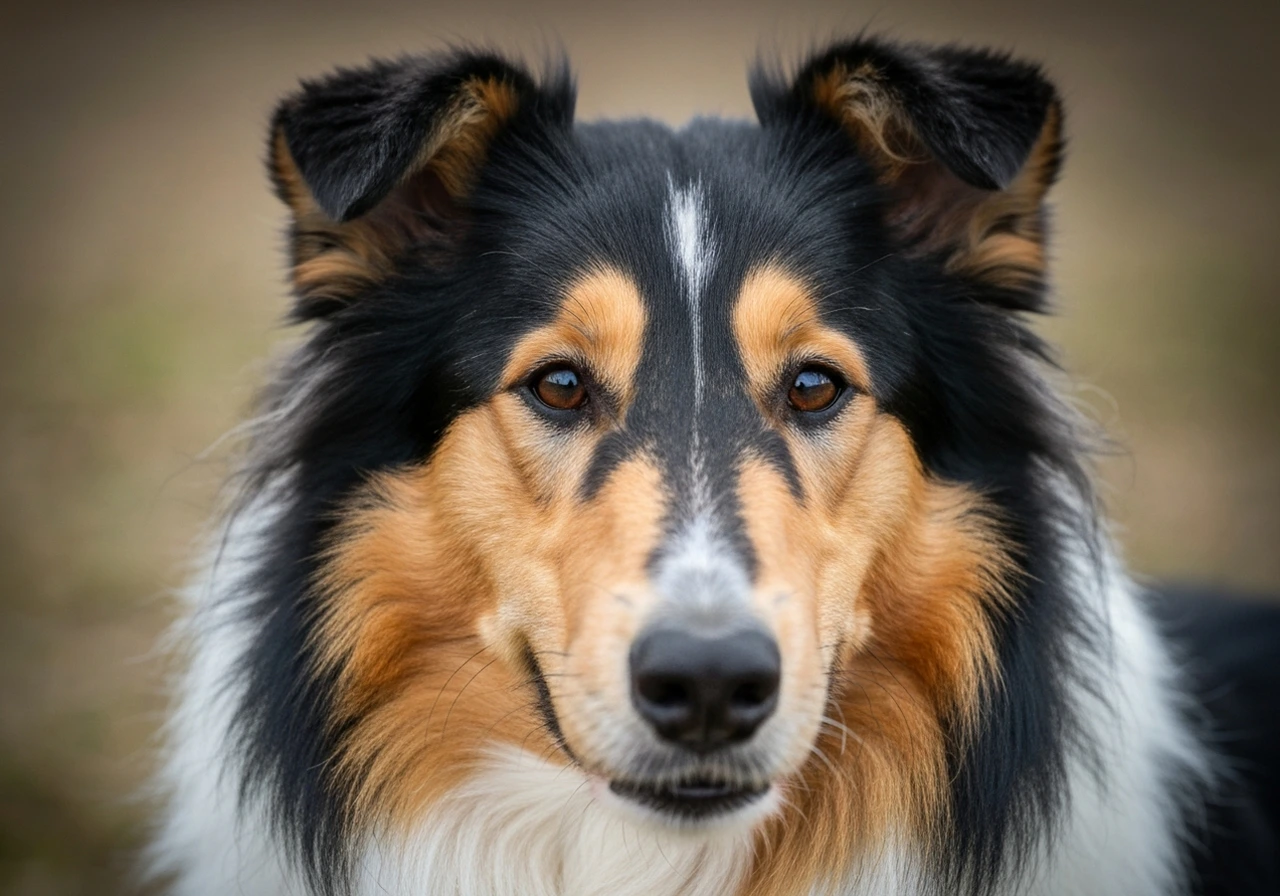
Warning Signs Requiring Immediate Attention
Seek Emergency Care If You Observe:
Sudden apparent blindness or dramatic visual change. Blood visible within the eye (appearing as red or dark discolouration). Severe eye pain (squinting, rubbing, head shyness). Sudden onset of cloudiness or opacity in the eye. Any acute change in eye appearance or behaviour.
Environmental Adaptations
Most CEA-affected dogs need no environmental modifications whatsoever. However, for dogs with significant visual impairment or those who develop complications, thoughtful adaptations help maintain quality of life.
For Dogs with Mild-Moderate Impairment
- Consistent furniture placement - dogs memorise their environment; avoid rearranging unnecessarily
- Adequate lighting - ensure living areas are well-lit, especially stairs and doorways
- Verbal cues - use consistent words when approaching or signalling direction changes on walks
- Textured pathways - outdoor mats or different surfaces can help dogs navigate familiar routes
- Gates for hazards - block access to pools, steep stairs, or other dangerous areas
For Dogs with Severe Impairment
Dogs who lose substantial vision adapt remarkably well. Their other senses compensate, and they develop mental maps of their environment with impressive accuracy. I have known blind dogs who navigate homes so confidently that visitors are unaware of their impairment.
- Scent markers - placing different scents at key locations (vanilla near food bowl, lavender by back door) helps orientation
- Sound cues - fountain or radio in a consistent location provides auditory landmark
- Leash guidance - on walks, maintain gentle leash tension to signal turns and obstacles
- Protective gear - "halo" devices that extend around the head warn of obstacles before collision
- Stable routine - predictable schedules and pathways reduce confusion
Remarkable Adaptability
Dogs rely less on vision than humans do. Their world is primarily olfactory and auditory. Blind dogs often continue enjoying walks, playing with family, and engaging with life enthusiastically. The emotional adjustment is frequently harder for owners than for dogs themselves.
Activities and Exercise
Should CEA limit your dog's activities? For the vast majority, absolutely not. Dogs with mild CEA (choroidal hypoplasia alone) have no activity restrictions. They can participate in any canine sport or work their genetics suit them for.
Dogs with colobomas may benefit from avoiding activities with high head-trauma risk if their veterinary ophthalmologist advises caution. Rough play with larger dogs, certain contact sports, or activities where collision is likely might be approached more carefully. However, most normal activities pose no elevated risk.
Even dogs with significant visual impairment can enjoy active lives. Swimming (with supervision), scent work, obedience, and many other activities do not require perfect vision. I encourage owners to focus on what their dog CAN do rather than dwelling on limitations.
Disclosure and Documentation
Your dog's CEA status should be documented and disclosed in several contexts.
Veterinary Records
Ensure your primary veterinarian has copies of all ophthalmologic examination reports. Any veterinarian treating your dog should know their CEA status, particularly before ophthalmic procedures or if eye problems develop.
Pet Sitters and Boarders
Inform anyone caring for your dog about their condition. Provide written guidance on monitoring and emergency contact information for veterinary care.
Insurance
Disclose CEA status to pet insurers. Pre-existing conditions are typically excluded from coverage, but failure to disclose can void policies entirely. Accurate disclosure protects your coverage for unrelated conditions.
Breeding Considerations
Affected dogs should not be bred except under carefully considered circumstances with expert guidance. If you acquired your dog as a pet, spaying or neutering prevents accidental matings and removes breeding decisions from consideration.
Emotional Aspects
Receiving a diagnosis for your pet can trigger grief, guilt, or anxiety. These feelings are valid, but perspective helps.
CEA is congenital; your dog has had this condition since before birth. They have never known different and have no sense of loss. They are the same dog you loved before the diagnosis; only your knowledge has changed.
If guilt arises about acquiring a dog with a hereditary condition, remember that responsible management of CEA involves placing affected puppies in loving homes, not discarding them. Providing excellent care for an affected dog is not endorsing irresponsible breeding; it is honouring the dog's intrinsic worth.
Connect with other CEA dog owners through breed clubs or online communities. Sharing experiences with others who understand can ease isolation and provide practical tips.
Working with Your Veterinary Team
Your primary veterinarian and veterinary ophthalmologist form a team supporting your dog's eye health. Maintain regular communication and follow recommended examination schedules.
Bring questions to appointments. No concern is too small. Your observations at home provide valuable information that complements clinical findings.
If you are ever uncertain whether a change warrants attention, err on the side of seeking advice. Early detection of complications improves outcomes.
Quality of Life: The Bottom Line
In my decades examining CEA-affected dogs and following them through their lives, the overwhelming pattern is one of normalcy. These dogs play, work, compete, and love their families without hindrance from their diagnosis. The condition rarely progresses, complications are uncommon, and most affected dogs never experience a moment of visual difficulty.
The diagnosis is not a tragedy. It is information; information that guides monitoring, informs breeding decisions, and ensures appropriate care. Armed with knowledge, you can provide your CEA-affected dog with a life every bit as full and joyful as any other.
I think of the hundreds of families whose dogs I have diagnosed with mild CEA over the years. The vast majority left my clinic with relief rather than despair once they understood what the findings actually meant. Their dogs went on to long, happy lives indistinguishable from those of unaffected peers.
Your dog is more than their eyes. They are your companion, your family member, your friend. CEA changes none of that. With appropriate monitoring and a willingness to adapt if needed, you and your dog can look forward to many wonderful years together.
For broader context on inherited conditions in herding breeds and how to approach them comprehensively, resources on herding breed genetics provide additional perspective on managing genetic health holistically.